Real World Asset Tokenization: Features, Benefits, and Use Cases
By Nexvyon Team
|March 9, 2026
|9 min read
Imagine owning a fraction of a luxury property, gold reserve, or government bond without complex paperwork, high capital requirements, or geographical limitations. This is exactly what real-world asset tokenization makes possible.
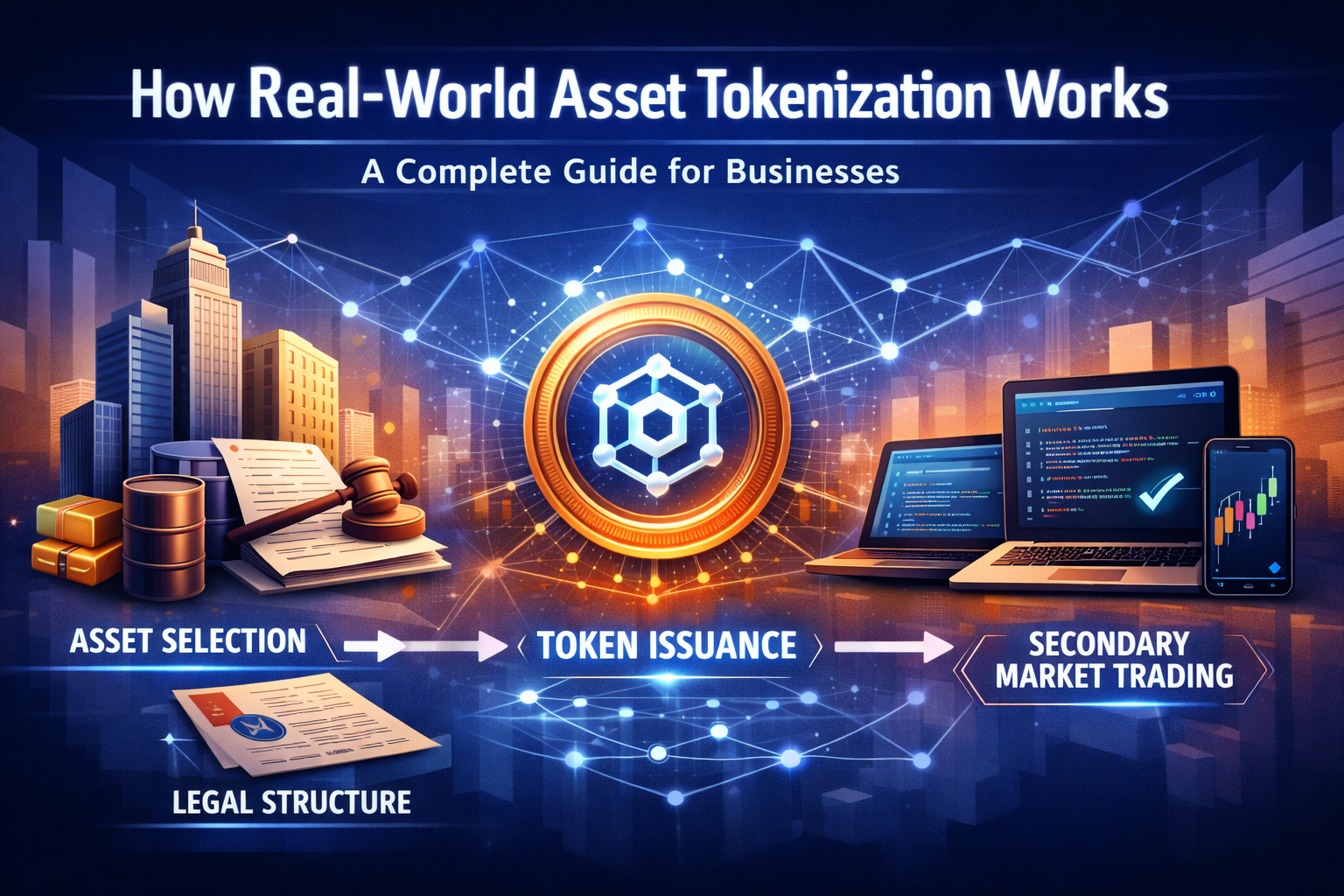
Real-world asset (RWA) tokenization is the process of converting physical or traditional financial assets into digital tokens on a blockchain. These tokens represent verified ownership or rights to real-world assets and can be securely traded, transferred, or managed online.
For businesses, investors, and institutions, tokenization unlocks improved liquidity, transparency, and global accessibility that were previously difficult to achieve. By bridging traditional finance with blockchain technology, real-world asset tokenization is shaping how assets are owned, invested in, and exchanged in the digital economy.
What Is Real World Asset Tokenization?
Real World Asset tokenization is the process of converting physical or off-chain assets into digital tokens on a blockchain. Each token represents ownership or a share of the underlying real-world asset and can be traded securely on blockchain-based platforms.
These assets can include:
- Real estate
- Commodities (gold, oil, agricultural products)
- Stocks and bonds
- Art and collectibles
- Invoices and receivables
- Intellectual property
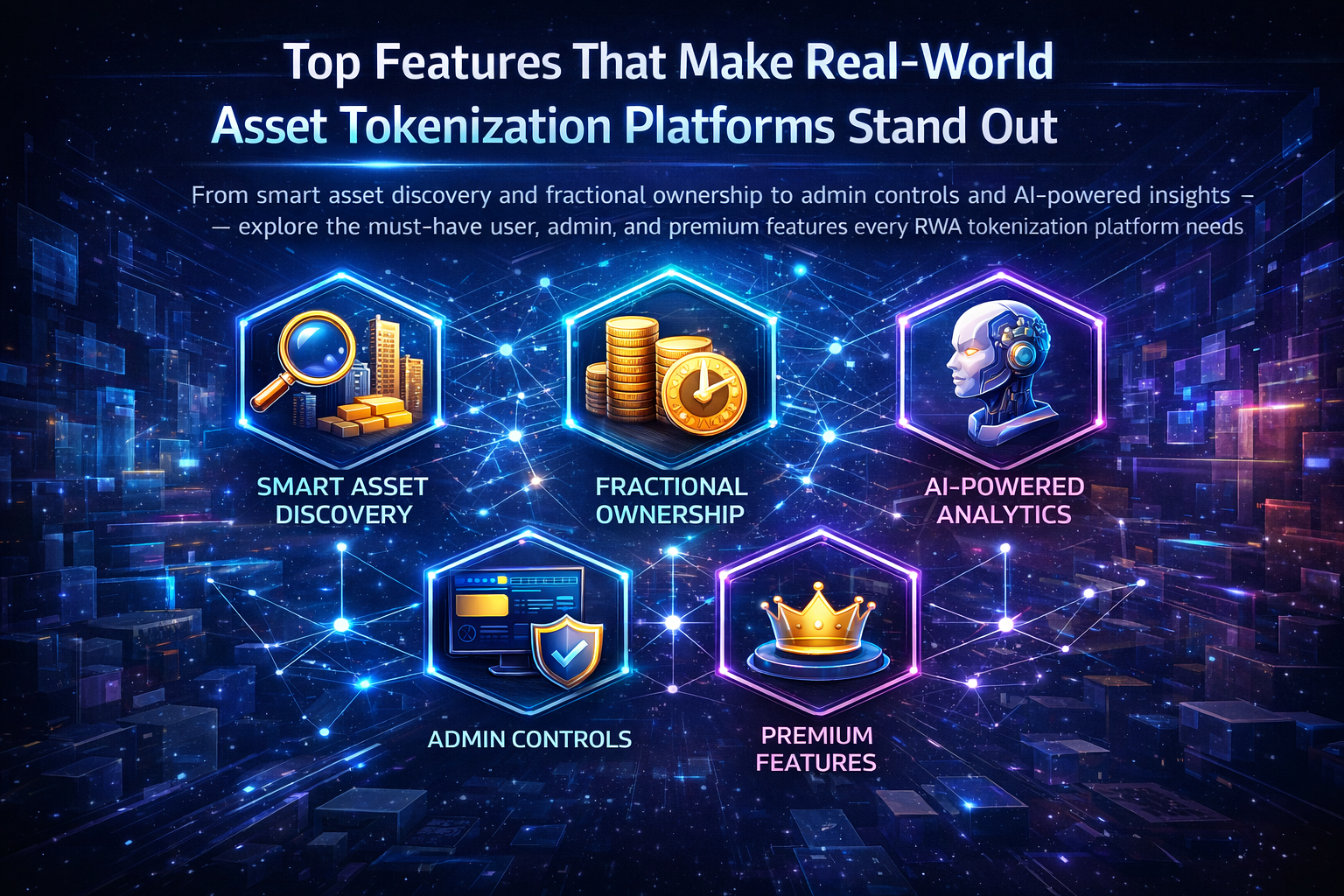
Features of Real World Asset Tokenization
1. Fractional Ownership
Real-world asset tokenization allows high-value assets such as real estate, commodities, and art to be divided into smaller digital units. This enables investors to participate with lower capital while maintaining proportional ownership rights.
2. Blockchain-Based Transparency
All transactions, ownership records, and asset movements are stored on an immutable blockchain ledger. This ensures high transparency, auditability, and trust for all participants.
3. Enhanced Liquidity
Tokenized assets can be traded on digital marketplaces, turning traditionally illiquid assets into liquid investment opportunities with faster buy and sell processes.
4. Global Accessibility
RWA tokenization removes geographical barriers by enabling cross-border investment. Anyone with internet access and a compliant wallet can participate in asset ownership.
5. Smart Contract Automation
Smart contracts automate processes such as ownership transfers, dividend distribution, interest payments, and compliance checks — reducing manual effort and operational costs.
6. Secure Asset Ownership
Digital tokens are secured through cryptographic technology, protecting ownership rights and reducing the risk of fraud or unauthorized transfers.
7. Regulatory & Compliance Support
Tokenized assets can be designed to follow KYC, AML, and jurisdiction-specific regulatory frameworks, ensuring legal compliance for institutions and investors.
8. Faster Settlement
Unlike traditional asset settlements that take days, blockchain-based transactions settle in minutes, improving efficiency and cash flow.
9. Reduced Intermediaries
Tokenization minimizes reliance on brokers, custodians, and clearing houses, lowering transaction fees and simplifying asset management.
10. Real-Time Asset Tracking
Owners and administrators can monitor asset performance, ownership history, and transaction activity in real time through blockchain records.
Benefits of Real World Asset Tokenization
1. Increased Liquidity
Tokenization converts traditionally illiquid assets like real estate, commodities, and private equity into tradable digital tokens, making it easier to buy and sell assets quickly.
2. Fractional Investment Opportunities
High-value assets can be divided into smaller units, allowing investors to participate with lower capital and diversify their portfolios more effectively.
3. Global Market Access
Blockchain technology enables borderless investing, giving businesses and investors access to global markets without geographical restrictions.
4. Enhanced Transparency
All ownership records and transactions are stored on a tamper-proof blockchain ledger, ensuring clear visibility and trust for all participants.
5. Faster Transactions & Settlement
Tokenized asset transactions settle in minutes instead of days, improving operational efficiency and cash flow.
6. Lower Operational Costs
By reducing intermediaries such as brokers and clearing houses, tokenization minimizes transaction fees, paperwork, and administrative overhead.
7. Improved Security
Cryptographic security and decentralized systems protect asset ownership and reduce risks associated with fraud and unauthorized access.
8. Automated Compliance & Operations
Smart contracts enable automated KYC, AML checks, dividend payouts, and interest distributions, reducing manual processes and errors.
Top 5 Use Cases of RWA Tokenization
1. Real Estate Tokenization
Enables fractional ownership of properties, making high-value real estate accessible to more investors and improving liquidity.
2. Commodity Tokenization
Physical assets like gold, silver, and oil are tokenized, allowing secure, digital trading without handling the actual commodity.
3. Financial Instruments & Bonds
Treasury bonds, corporate debt, and other securities can be tokenized, simplifying trading, compliance, and accessibility.
4. Art & Collectibles
Fine art, rare collectibles, and luxury items can be fractionally owned and traded digitally, opening high-value markets to more investors.
5. Private Equity & Venture Capital
Shares of private companies can be tokenized, providing liquidity and access to investment opportunities that were previously exclusive.
RWA Tokenization vs Traditional Asset Management
| Feature | Traditional Asset | Tokenized Asset |
|---|---|---|
| Liquidity | Low | High |
| Ownership | Centralized | Decentralized |
| Accessibility | Limited | Global |
| Transparency | Limited | High |
| Settlement Time | Days | Minutes |
Future of Real World Asset Tokenization
The future of real world asset tokenization is closely tied to the growing adoption of blockchain technology by traditional financial institutions, enterprises, and governments. As asset owners and investors seek greater efficiency, transparency, and accessibility, tokenization is becoming a practical solution for managing and distributing real-world assets in digital form.
In the coming years, real world asset tokenization is expected to support a wide range of asset classes, including real estate, commodities, bonds, private equity, and intellectual property. Financial institutions are increasingly exploring tokenized securities to improve settlement times, reduce operational complexity, and expand investor participation.
Conclusion
Real World Asset tokenization is changing how ownership, investment, and asset management function in the digital era. Through blockchain technology, businesses and investors gain improved efficiency, transparency, and global reach. As adoption continues to grow, Nexvyon is a top real asset tokenization development company enabling tokenized assets to play a significant role in the future of digital finance.
Related Articles
Ready to Launch Your Crypto Exchange?
Partner with Nexvyon to build a secure, scalable, and high-performance trading platform.
Get In Touch
Reach out, and let's create a universe of possibilities together!
Let’s connect
Let's align our constellations! Reach out and let the magic of collaboration illuminate our skies.
Ready to Boost Your Productivity?
Sign up now and see the difference Increasy can make for your team.