How Real-World Asset Tokenization Works?
By Nexvyon Team
|March 14, 2026
|11 min read
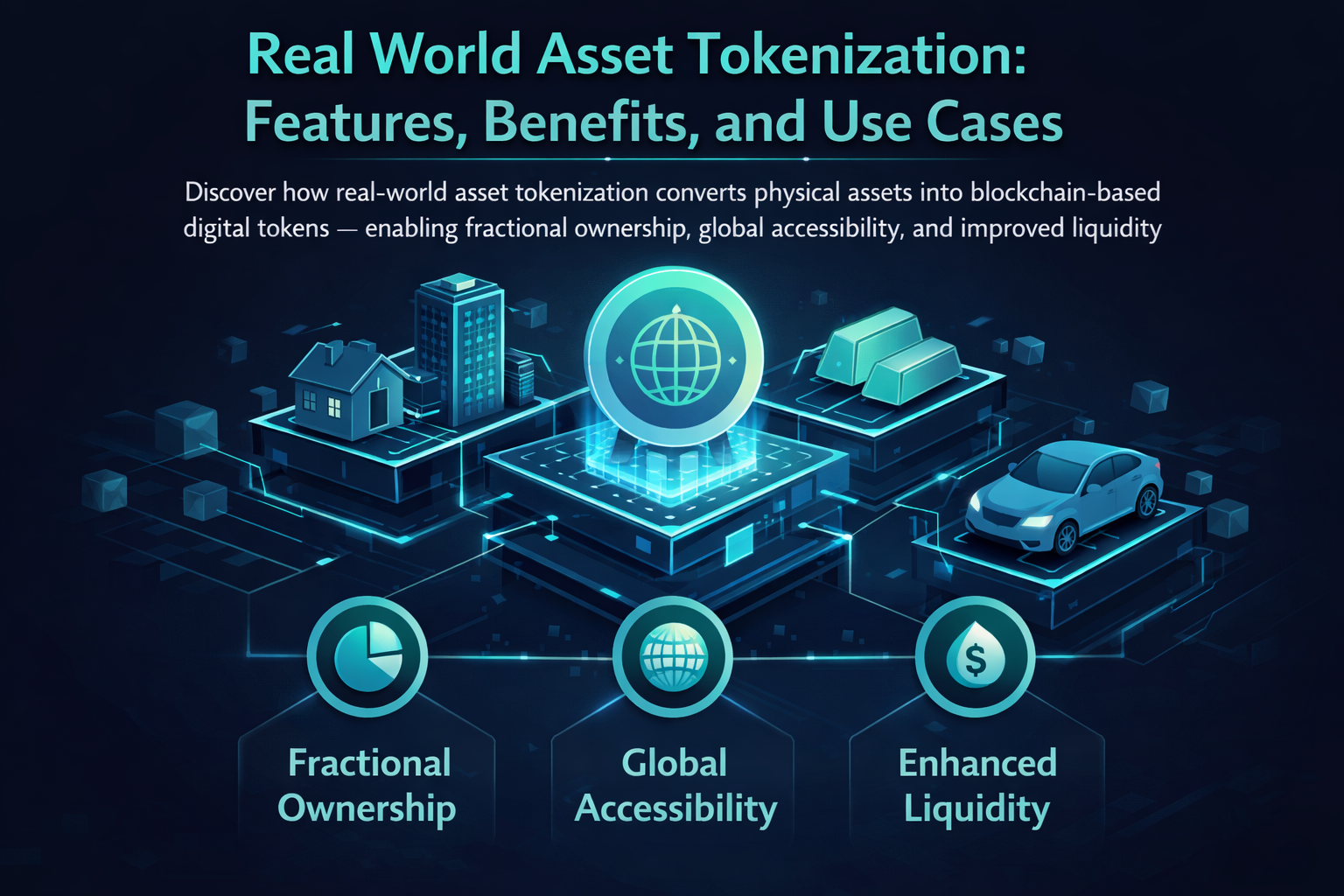
Real-world asset (RWA) tokenization is one of the most transformative applications of blockchain technology. It bridges the gap between physical assets and digital finance, creating new ways to own, trade, and invest in assets that were traditionally difficult to access or divide.
But how exactly does the tokenization process work? In this guide, we walk through every step — from selecting an asset to trading it on a blockchain-based marketplace so businesses and investors can understand the full picture before getting started.
What Is Real-World Asset Tokenization?
Tokenization is the process of converting ownership rights in a real-world asset into a digital token recorded on a blockchain. These tokens are programmable, transferable, and can represent partial or full ownership of the underlying asset. Once tokenized, assets can be bought, sold, or transferred globally without the friction of traditional paperwork, intermediaries, or geographical limitations.
How Real-World Asset Tokenization Works: Step by Step
Step 1: Asset Selection and Valuation
The process begins with identifying the asset to be tokenized. This can be a property, a commodity like gold, a financial instrument, artwork, or intellectual property. Once selected, the asset undergoes professional valuation to establish its market value — which determines the token price and total supply.
Accurate valuation is critical. It sets the foundation for investor trust and regulatory compliance throughout the tokenization process.
Step 2: Legal Structuring and Compliance
Before any token is created, the legal framework must be established. This involves structuring ownership rights in a way that is legally recognized in the relevant jurisdiction. This may include forming a Special Purpose Vehicle (SPV), creating a trust, or entering a legal agreement that binds token ownership to real-world asset rights.
KYC (Know Your Customer) and AML (Anti-Money Laundering) requirements are defined at this stage to ensure the platform complies with financial regulations. Legal clarity protects both asset owners and investors from future disputes.
Step 3: Token Creation and Smart Contract Development
Once the legal and compliance framework is in place, smart contracts are developed to govern the token's behavior. These self-executing contracts define the rules of ownership including how tokens are issued, transferred, and redeemed.
Common token standards used in RWA tokenization include:
- ERC-20 — for fungible tokens representing equal shares
- ERC-721 — for non-fungible tokens representing unique assets
- ERC-1400 — designed specifically for security tokens with compliance controls
The smart contract also automates processes such as dividend distribution, voting rights, and transfer restrictions based on investor eligibility.
Step 4: Token Issuance on the Blockchain
After smart contracts are audited and approved, tokens are minted and issued on the chosen blockchain network. Each token represents a defined share of the underlying asset — for example, one token might represent 0.01% ownership of a commercial property.
The token supply, pricing, and distribution rules are all embedded in the smart contract, ensuring transparency and consistency from day one.
Step 5: Investor Onboarding and KYC Verification
Before investors can purchase tokens, they must complete identity verification through the platform's KYC/AML process. This typically includes document verification, facial recognition checks, and compliance screening against regulatory databases.
Once verified, investors receive access to their digital wallets on the platform, where they can browse available tokenized assets and make purchases using crypto or fiat currency.
Step 6: Primary Token Distribution
Tokens are made available to verified investors through a primary offering similar to an IPO for traditional securities. This may be structured as a private placement for institutional investors or a public offering for retail participants.
The proceeds from the token sale are used to acquire, develop, or manage the underlying real-world asset, while investors receive tokens representing their ownership stake.
Step 7: Ongoing Asset Management and Reporting
After the initial issuance, the platform continues to manage the asset and provide investors with real-time reporting. Smart contracts automatically distribute earnings such as rental income from a tokenized property to token holders based on their ownership percentage.
Blockchain records provide a transparent, immutable history of all transactions, distributions, and ownership changes, giving investors full visibility into their holdings.
Step 8: Secondary Market Trading
One of the most powerful aspects of tokenization is that investors are not locked in. Tokens can be traded on secondary markets dedicated tokenized asset exchanges or compliant trading platforms giving investors the flexibility to exit their positions when needed.
This secondary liquidity transforms traditionally illiquid assets like real estate or private equity into accessible, tradeable investments that can be bought and sold quickly and efficiently.
Key Participants in the Tokenization Process
- Asset Owner the entity that holds the original asset and initiates tokenization
- Legal Advisors — structure the ownership framework and ensure regulatory compliance
- Tokenization Platform provides the technology infrastructure for token issuance and management
- Blockchain Network — records all transactions and token activity immutably
- Investors purchase tokens and receive ownership rights and returns
- Regulators oversee compliance and protect investor interests
Why Businesses Choose RWA Tokenization?
- Access global investor pools without geographical restrictions
- Improve asset liquidity by enabling fractional ownership
- Reduce administrative overhead through smart contract automation
- Increase transparency and investor confidence via blockchain records
- Accelerate settlement times from days to minutes
- Lower barriers to entry for smaller investors
Conclusion
Real-world asset tokenization is not a distant concept it is an operational reality being adopted by leading financial institutions, real estate firms, and blockchain-native companies today. The process is systematic, transparent, and backed by proven blockchain infrastructure.
Understanding how tokenization works is the first step toward leveraging it for your business. Whether you are looking to tokenize real estate, commodities, or financial instruments, partnering with the right development company makes all the difference.
Nexvyon is a leading real-world asset tokenization development company that helps businesses design, build, and launch compliant, secure, and scalable tokenization platforms. Connect with Nexvyon today to explore how tokenization can transform your assets into digital investment opportunities.
Related Articles
Ready to Launch Your Crypto Exchange?
Partner with Nexvyon to build a secure, scalable, and high-performance trading platform.
Get In Touch
Reach out, and let's create a universe of possibilities together!
Let’s connect
Let's align our constellations! Reach out and let the magic of collaboration illuminate our skies.
Ready to Boost Your Productivity?
Sign up now and see the difference Increasy can make for your team.