Best API for Crypto Exchange Integrations in 2026: A Complete Guide for Founders
By Nexvyon Team
|December 1, 2025
|8 min read
Building a crypto exchange today is easier than ever — but building a successful one is a different challenge.
Most new founders assume: "If I launch my exchange and get traders, the platform will grow automatically."
But the reality is different. Every month, new crypto trading platforms, DeFi apps, and Web3 tools enter the market. To stand out in 2026, your exchange needs more than basic trading features. It needs advanced, reliable, and high-performance API integrations.
APIs determine how fast your cryptocurrency exchange responds, how accurate your prices are, how secure your system remains, and how smooth the overall user experience feels.
In this guide, you'll discover:
- What a crypto exchange API is
- Types of APIs every platform uses
- The best APIs for building a powerful trading experience
- How to choose the right API stack in 2026
- Why APIs directly impact your exchange's success
What Is a Crypto Exchange API?
A Crypto Exchange API (Application Programming Interface) allows your platform to communicate with external systems like price feeds, wallets, liquidity providers, and payment gateways.
The simplest example: You request data → the API fetches it → the exchange displays it instantly.
APIs handle critical tasks such as:
- Updating live market prices
- Managing user balances
- Executing trades
- Streaming order book data
- Verifying user identity
- Processing crypto and fiat transactions
In short, APIs are the engine that keeps your exchange running 24/7.
Main Types of Crypto Exchange APIs
To build a fully functional and scalable crypto exchange, you need different layers of APIs working together. Each type performs a specific role and helps your platform run smoothly, securely, and efficiently.
1. Public APIs
Provide open access to market data such as live coin prices, market depth, 24h volume, and price changes. These APIs ensure users always see fresh, real-time information — even without logging in.
2. Private APIs
Require user authentication and allow personal account actions: placing buy/sell orders, checking balances, viewing trade history, and managing portfolios. They are essential for secure trading operations.
3. Partner APIs
Used to connect your exchange with external service providers such as liquidity networks, payment processors, banking solutions, and compliance platforms. They expand your platform's capabilities significantly.
4. Composite APIs
Combine multiple tasks into a single request, improving performance. Useful for dashboards that require multiple data points at once.
5. Internal APIs
Run inside the system and connect backend modules such as admin dashboards, analytics tools, and KYC management panels. These APIs ensure stable internal communication and system reliability.
Essential Crypto Exchange APIs for 2026
To build a competitive and future-proof crypto exchange, you need a combination of advanced APIs that support real-time performance, security, global connectivity, and an intuitive trading experience.
1. Price Ticker API
A Price Ticker API delivers real-time cryptocurrency prices sourced from multiple global exchanges. Accuracy and speed matter because traders depend on up-to-the-second market information to make buying and selling decisions. Without it, users may see outdated prices, which can lead to missed opportunities and reduced trust.
2. Wallet API
The Wallet API manages how funds move inside your exchange. It handles user balances, deposits, withdrawals, and internal transfers securely. A strong Wallet API supports multi-chain wallet operations, private key security, and hot/cold wallet integration. As security risks grow in 2026, your wallet API must include encryption, automated verification, and anti-fraud measures.
3. Historical Data API
Traders rely heavily on past price data to study trends, test strategies, and analyze market patterns. The Historical Data API provides access to price history — from hourly and daily charts to years' worth of market movement. In 2026, exchanges with detailed historical insights naturally attract serious traders who prioritize data-based decisions.
4. Trading Bot API
As automated trading continues to grow, the Trading Bot API becomes essential for attracting high-volume and algorithmic traders. It allows users to create or connect trading bots that execute orders automatically based on pre-set rules. With this API, your platform becomes more appealing to professional traders who expect automation, speed, and precision.
5. REST API
A REST API is the foundation of most exchange operations. It enables standard requests — like checking balances, placing orders, updating user profiles, managing open orders, and accessing market data. In 2026, users expect fast and stable interactions, and a strong REST API ensures smooth navigation and instant responses across web and mobile applications.
6. WebSocket API
For real-time performance, the WebSocket API is essential. Unlike REST, which sends data only when requested, WebSocket keeps a continuous connection open and pushes updates instantly. This is crucial for order books, trade feeds, live charts, and high-frequency trading — giving your exchange a competitive edge.
7. Payment API
A Payment API connects your exchange with crypto payment channels, fiat gateways, and financial institutions. It manages deposits, withdrawals, conversions, and settlement processes. In 2026, exchanges with quick and seamless payment infrastructure build stronger user trust and reduce friction during onboarding.
8. Merchant API
A Merchant API allows businesses and online platforms to accept cryptocurrency payments through your exchange. This API expands your exchange beyond trading and turns it into a payment ecosystem — opening additional revenue streams and attracting B2B clients.
9. Liquidity API
Liquidity is one of the biggest challenges for new exchanges. A Liquidity API connects your platform with major liquidity providers or global trading networks. This ensures better order execution, reduced slippage, tighter spreads, and faster trades — even when your platform has fewer users initially.
10. KYC / Identity Verification API
A KYC API automates user verification during registration. It checks identity documents, matches user photos, verifies personal details, and ensures regulatory compliance. With rising global regulations in 2026, automated identity verification is mandatory — preventing fraud and providing a secure onboarding experience.
11. Streams API
A Streams API provides one-way continuous data feeds from your server to the user interface. It is ideal for charts, dashboards, transaction feeds, and price trackers. Traders benefit from smooth, real-time visual insights directly on their screens.
How to Choose the Right API for Your Crypto Exchange?
Selecting the right APIs can determine your cryptocurrency exchange's long-term efficiency and scalability.
1. Define Your Platform's Goals
Do you aim for high-frequency trading, merchant services, or multi-chain support? Your goals guide your API choices.
2. Review Documentation Quality
Good documentation saves weeks of development time.
3. Check API Speed & Latency
Lower latency = faster trades = happier users.
4. Prioritize Security
Look for encryption standards, strong authentication, and secure endpoints.
5. Ensure Scalability
APIs should handle growth without slowing down.
6. Choose Providers With Strong Support
Quick issue resolution ensures consistent uptime.
Benefits of Integrating Reliable Crypto APIs
- Faster development cycles
- Real-time trading experience
- Better market accuracy
- Stronger security
- Higher user satisfaction
- Smooth third-party integrations
- Automated trading tools
- Lower operational costs
- Improved liquidity
- Rapid launch timeframe
Final Thoughts
APIs are the backbone of every high-performance crypto exchange. From faster transactions to accurate price feeds and global liquidity access, your exchange's success depends heavily on the quality of its API integration.
As we move into 2026, modern exchanges will rely more on AI-driven APIs, cross-chain connectivity, automation, and smart risk management tools.
If you're planning to launch or upgrade a crypto exchange, Nexvyon provides end-to-end cryptocurrency exchange development solutions with all essential and advanced API integrations tailored to your business goals.
Related Articles

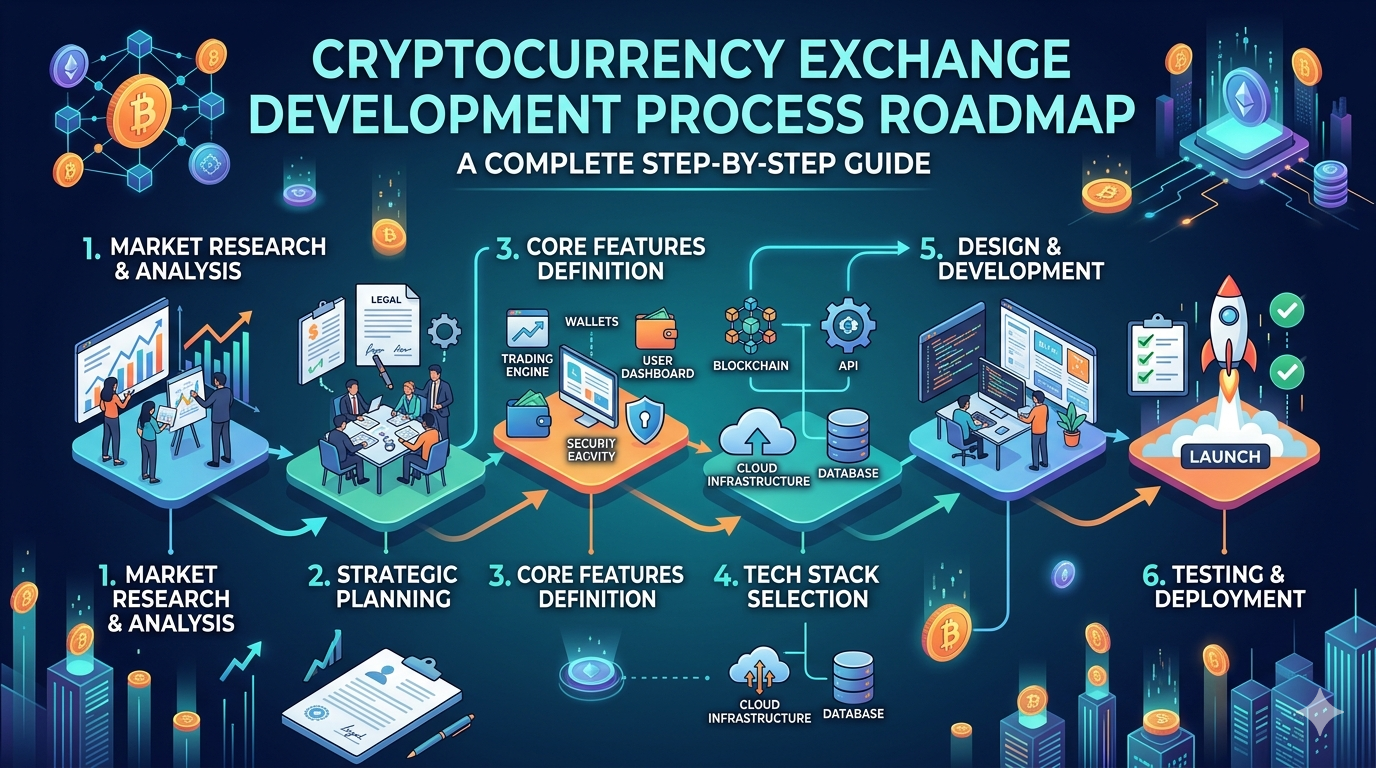
Ready to Launch Your Crypto Exchange?
Partner with Nexvyon to build a secure, scalable, and high-performance trading platform.
Get In Touch
Reach out, and let's create a universe of possibilities together!
Let’s connect
Let's align our constellations! Reach out and let the magic of collaboration illuminate our skies.
Ready to Boost Your Productivity?
Sign up now and see the difference Increasy can make for your team.